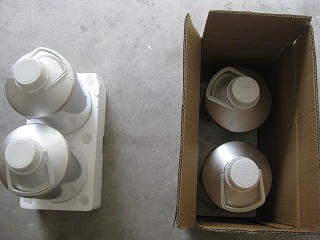

Extra Virgin olive oil
Extra Virgin olive oil is a monounsaturated oil of high nutr...

Now, people normally take TG arachidonic Acid, as it has better absorbility than EE. But EE ARA is also applied in some special industry.
1.What does arachidonic acid do in the body?
Arachidonic acid is important because the human body uses it as a starting material in the synthesis of two kinds of essential substances, the prostaglandins and the leukotrienes, both of which are also unsaturated carboxylic acids.
2. What foods are high in arachidonic acid?
Arachidonic acid is found in animal products, like poultry and eggs. The amount
of arachidonic acid found in just one egg a day elevated arachidonic acid
levels in the bloodstream, Japanese researchers learned.
3. What is synthesized from arachidonic acid?
The most important protaglandin precursor is arachidonic acid. Arachidonic acid is an essential fatty acid and is also synthesized from dietarily essential linoleic acid. Essential Fatty Acids: Linoleic, a-Linolenic and Arachidonic acids.
4. Where is arachidonic acid stored in the body?
Arachidonic acid is naturally found incorporated in the structural phospholipids in the cell membrane in the body or stored within lipid bodies in immune cells . It is particularly abundant in skeletal muscle, brain, liver, spleen and retina phospholipids .
5. How Is arachidonic acid?
Arachidonic acid is an essential fatty acid, which is consumed in small amounts in our regular diets. It is considered an essential fatty acid because it is an absolute requirement for the proper functioning for the human body.
6. What is arachidonic acid good for?
Arachidonic acid benefits and side effects. Arachidonic acid is a fatty acid most commonly found in peanut oil that is responsible for muscle tissue inflammation. Arachidonic acid leads to an increase in the production of eicosanoids that help raise immunity and inflammatory responses in your body.
7. Is arachidonic acid inflammatory?
Arachidonic acid is a polyunsaturated fatty acid covalently bound in esterified
form in the cell membranes of most body cells. Following irritation or
injury, arachidonic acid is released and oxygenated by enzyme systems
leading to the formation of an important group of inflammatory mediators,
the eicosanoids.
8. Is arachidonic acid essential?
Arachidonic acid is a polyunsaturated fatty acid with four cis double bonds,
which are the sources of its flexibility and give it the capacity to react
with molecular oxygen. Arachidonic acid is an omega-6 fatty acid. It is
one of the essential fatty acids that our body cannot manufacture.
9. What is the role of arachidonic acid?
Dietary arachidonic acid and inflammation Arachidonic acid is also metabolized
to inflammatory and anti-inflammatory eicosanoids during and after
physical activity to promote growth. Arachidonic acid does still play
a central role in inflammation related to injury and many diseased states.
10. Does milk contain arachidonic acid?
Arachidonic acid (AA, 20:4n-6) is one of the important polyunsaturated fatty
acids (PUFAs) that forms an important constituent of cell membranes.
Human milk contains significant amounts and cow's milk small amounts
of Arachidonic acid AA. Meat, egg yolks, some seaweeds, and some shrimps
also contain Arachidonic acid.
11. Which enzymes will produce arachidonic acid?
Once formed, arachidonic acid can be converted to any of the eicosanoids
(Figure 3-36). Cyclooxygenase is an enzyme that transforms arachidonic
acid into endoperoxides which are used to synthesize prostaglandins,
prostacyclin, or thromboxanes.
12. Is arachidonic acid an Omega 3?
Other serum omega-6 fatty acids, such as arachidonic acid, gamma-linolenic acid
or dihomo-y-linolenic acid, were not associated with CRP levels. Clinical
trials have shown that even a very high intake of linoleic acid does not
increase inflammatory responses, nor has a significant impact on
arachidonic acid levels.
13. What foods are high in omega 6?
What foods contain omega-3 and omega-6 fats? fatty fish like salmon, mackerel,
anchovies, sardines, arctic char and trout.
eggs (including omega-3 enriched)
flaxseeds and flaxseed oil.
walnuts.
soybeans.
tofu.
canola oil.
fortified foods like some margarines, juices and yogurts.
14. What is arachidonic acid good for?
Arachidonic acid benefits and side effects. Arachidonic acid is a fatty acid
most commonly found in peanut oil that is responsible for muscle tissue
inflammation. ... Arachidonic acid leads to an increase in the production
of eicosanoids that help raise immunity and inflammatory responses in your
body.
| Item | Specification |
|---|---|
| Appearance | Powder/Oil |
| Color | White to light yellow |
| Storage | Cool & dry place |
| Shelf Life | 24 months |